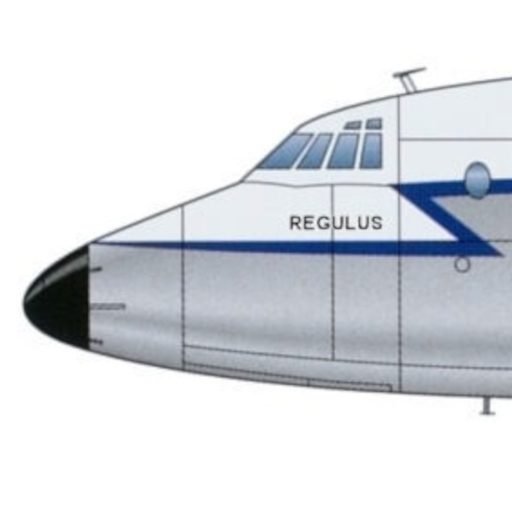
Bristol Britannia XL638 was the only Royal Air Force Bristol Britannia to be written off during the type's service. Although often referred to as a "crash," it was actually a runway overrun on landing at RAF Khormaksar, Aden (now Yemen), from which everyone survived.
The aircraft
- Registration: XL638
- Type: Bristol Britannia C.1
- Manufacturer's serial number: 13400
- Built: 1959
- Operator: RAF Transport Command
- Role: Strategic transport carrying troops, passengers and freight over long distances.
What happened?
On 12 October 1967 (some eyewitness accounts remember the event occurring during the night of 8 October, but official accident records list 12 October), XL638 landed at RAF Khormaksar, Aden during the final weeks of Britain's withdrawal from Aden.
After touchdown:
- the crew selected propeller reverse to help slow the aircraft;
- the reverse-pitch system failed
- XL638 overran the end of the runway;
- the undercarriage collapsed as it entered soft ground and shallow coastal water;
- the aircraft came to rest partly in the sea.
Remarkably:
- everyone on board survived;
- there were no fatalities;
- the aircraft was nevertheless damaged beyond economical repair and was written off.
Why wasn't it recovered?
Normally, a military transport stranded in shallow water might have been salvaged. However, the circumstances in Aden were anything but normal.
By October 1967:
- Britain was rapidly evacuating military personnel and civilians before independence.
- Khormaksar was operating at an extremely high tempo.
- The aircraft lay close enough to the runway that its tall fin became an obstruction to flying operations. The tail was remove to eliminate the hazard, after which the remainder of the aircraft was destroyed with explosives.
Historical significance
XL638's loss is notable because:
- it was the RAF's only Britannia hull loss;
- unlike the better-known civilian Britannia accidents, no lives were lost;
- it occurred during one of the RAF's most demanding post-war withdrawal operations, when Transport Command was flying continuous evacuation sorties from Aden.
If you're interested in RAF Transport Command history, XL638 is a fascinating case because it illustrates how operational pressures during the Aden Emergency affected decisions after an accident. There are also several striking photographs showing the aircraft resting in the mud and shallow water, before its fin was removed to clear the airfield approaches.