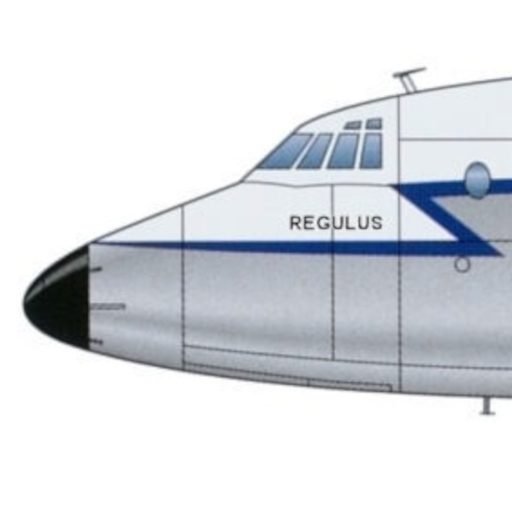
Timeline of our aircraft.
BRISTOL Type 175 BRITANNIA Series 253 (RAF C.Mk1)
XM496 Regulus
Our aircraft, XM496 'Regulus' has had a long and varied career and has undergone a series of identity changes over it's lifetime. It's history is shown pictorially in the following timeline. A more detailed history can be found the XM496 History page.
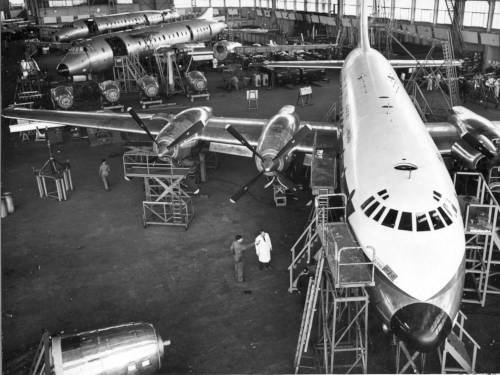
XM496 was built as a Bristol 175 Britannia Series 253 (RAF C.Mk 1) with constructor number 13508 at Belfast. The picture show the 2nd Series 253 aircraft built (XL636 - Argo), as we do not have a photo of XM496 during contruction.
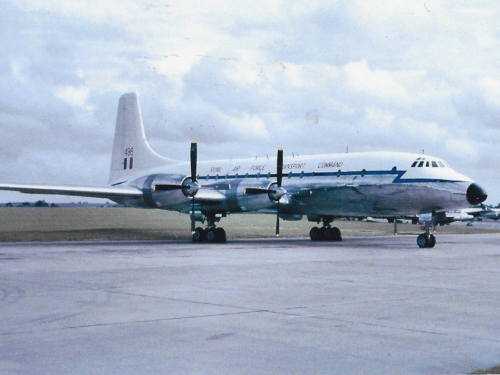
With polished aluminium lower fuselage and black propellers, the brand new XM496 was delivered to the RAF Transport Command, initially to RAF Benson for an air display. She was taken on charge 2 days later (19th Sept 1960) at RAF Lyneham, Wiltshire.
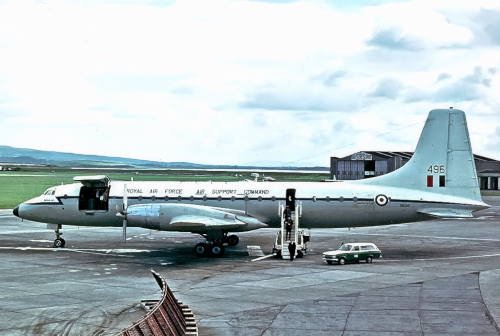
Here showing the Command name as AIR SUPPORT COMMAND, the lower fuselage is painted light Grey and the propellers are no longer black.
The polished silver finish was painted over as it was found that constant polishing was wearing the metal skin of the aircraft down and it was getting thinner with each polish.
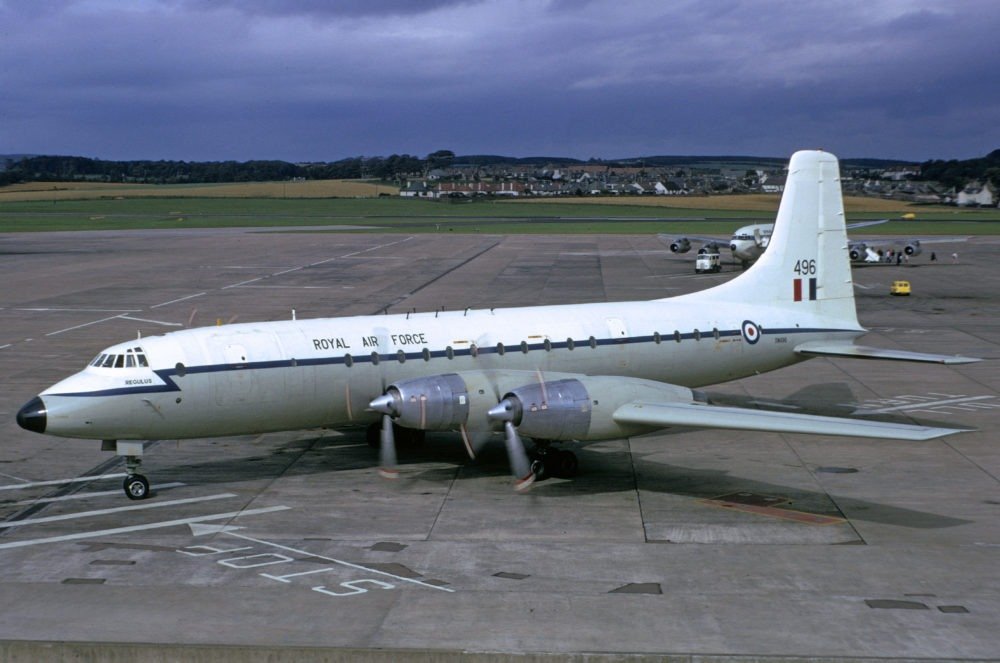
After another re-organisation Air Support Command became Strike Command. The command name was removed rather than update on XM496 and she spent her final years with the RAF simply identified by the legend ROYAL AIR FORCE.
Regulus served with distinction as part of the Britannia Pool operated by Nos. 99 and 511 Squadrons, quietly racking up an impressive 18,414 flying hours and 8,122 landings. In October 1975, after a long and exemplary military career, she was withdrawn from operational service and placed into storage at RAF Kemble before being sold to Monarch Airlines Engineering Ltd.
Pictured by Tom Singfiled at Prestwick in February 1974.
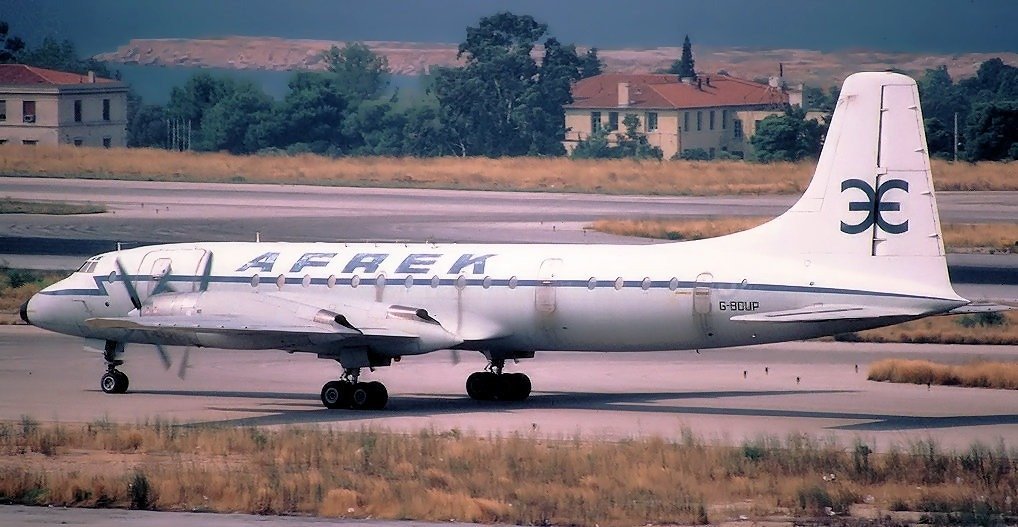
Converted by Monarch Airlines Engineering Ltd at Luton in early 1976 to a civilian 253F standard and and registered as G-BDUP, XM496 soon took on a new identity when she was repainted in the colours of Afrek Ltd.
Delivered to Athens in June 1976, she went on to operate extensively across West Africa. After six years in service, she was withdrawn from use and stored at Athens, awaiting sale.
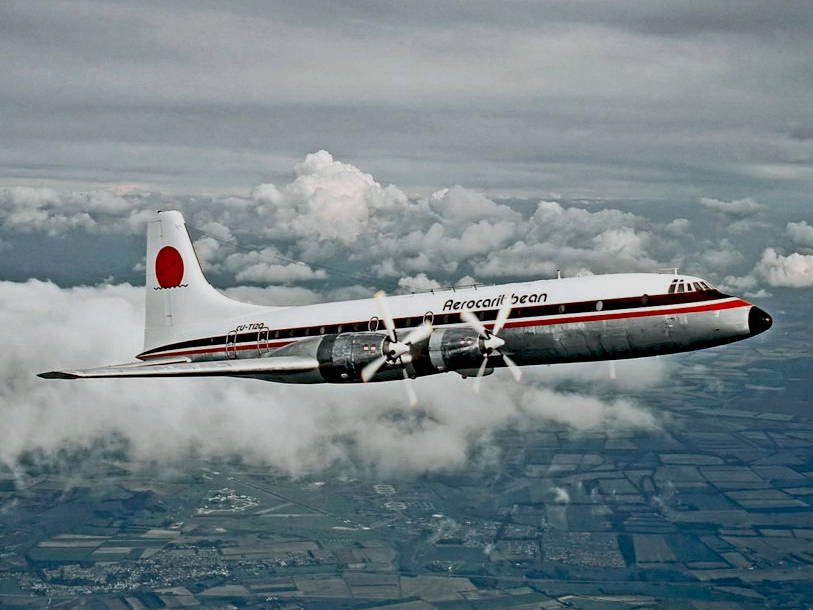
In July 1984, Monarch Aircraft Engineering Ltd reacquired G-BDUP and ferried her to Luton for a full overhaul prior to sale to Aerocaribbean. She was repainted in the airline’s livery, re-registered CU-T120, and flown to Havana, Cuba in October.
In March 1990, while operating a flight from Peru to Havana, the No. 4 engine was shut down, prompting an emergency and priority landing at Guayaquil, Ecuador. A three-engine ferry flight returned the aircraft to Havana the next day, where she was grounded due to a lack of spares.
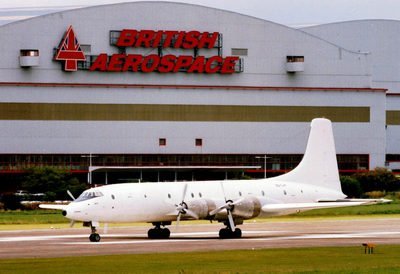
XM496 became the ‘Phoenix’ of the Britannia fleet as the last airworthy example. Thanks to Britannia enthusiast John Byrne, Technical Director of Transair Cargo Zaire, a purchase was agreed with Cuba. Byrne led a year-long engineering effort, salvaging spares from other stored Britannia airframes.
Re-registered 9Q-CJH “Jack,” she flew Havana–UK–Zaire in September 1993 and entered immediate freight service across Zaire. Arriving in Kinshasa on September 26, she supported vital logistics nationwide despite limited infrastructure and isolation.
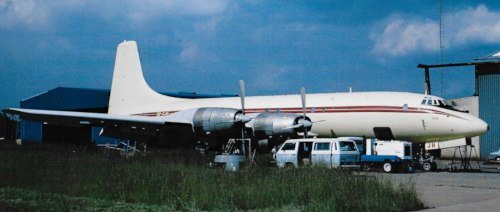
XM496 was operated by Transair Cargo for four years. In November 1993 she suffered an emergency landing in Kinshasa when the nose wheel refused to lower. A landing on the main wheels only, resulted in significant damage.
Patched up, she was flown to Johannesburg, where further repairs took place, she emerged once again fit for service in February 1994.
The picture shows her at Johannesburg after repair with a short lived maroon stripe applied, later replaced with light grey stripes.
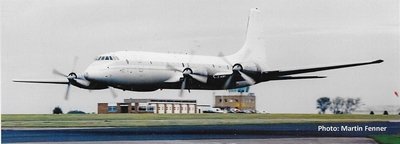
An in-flight engine failure and lack of spares finally brought XM496's commercial life to an end.
Re-registered EL-WXA, and made airworthy for one last flight, again by John Byrne, she flew to Kemble from Lanseria (South Africa) via Mafikeng, Douala and Majorca.
Arriving in spirited manner on 14th October 1997, piloted by Capt. Bob Sobek and crewed by Capt. Christian Vervaeke; Chief Eng. John Byrne.
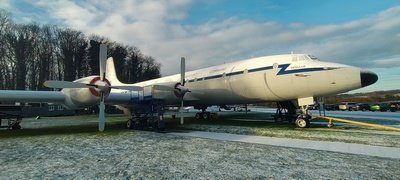
Restored both internally and externally to her original condition over many years of hard work by a series of dedicated and passionate volunteers XM496 still stands today.
As a surviving example of its type, and the only genuine ex RAF Britannia, it demonstrates the technological innovation and engineering skill of its era.
XM496 is also a testament to the dedication of the designers, engineers, ground crews, and aircrew who built, maintained, and operated it, and to the wider historical context in which it served.
If you are able, please help us keep this aircraft in the condition that it deserves by generously donating today and / or becoming a Friend of the Britannia.